


Take a look at our new non-fiction books for November, free to borrow with your library card. Includes titles by Tim Winton, Tessa Hadley and Alice Loxton.
Want more suggested books? Take a look at our recommendations.
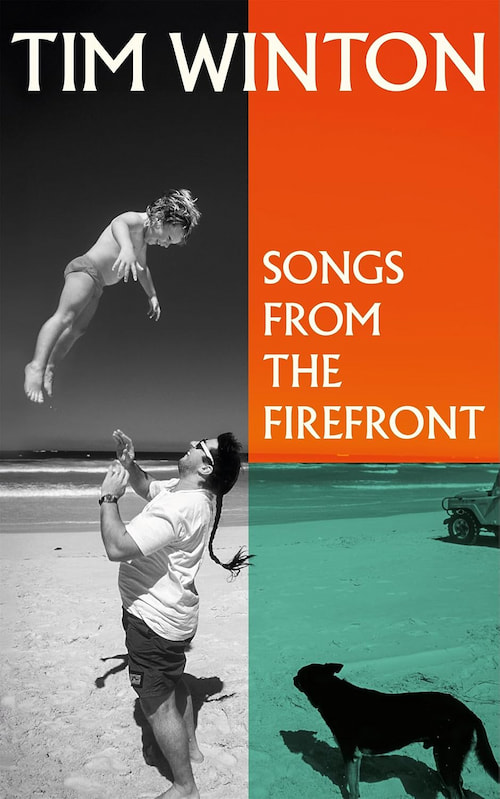
Songs From the Firefront
Tim Winton
A memoir in essays, ‘Songs from the Firefront’ is a book about the sacred fragility of existence. Deeply personal, brimming with anger and humour and love – for family, for the beautiful, brutal Australian landscape – Tim Winton’s writing invites you into the world of one of our greatest living writers.
Here he admits to stupidity alone in a vast canyon, paddleboards out to sea to visit the local dugong population, and tells of the horror and sadness of watching as his neighbourhood is lost to bush fires.
He tells the story of how he became friends with Helen Garner, the travelling that allowed him to write Cloudstreet, and about the act of unconditional love a father might agree to after his beloved daughter has delivered her child.
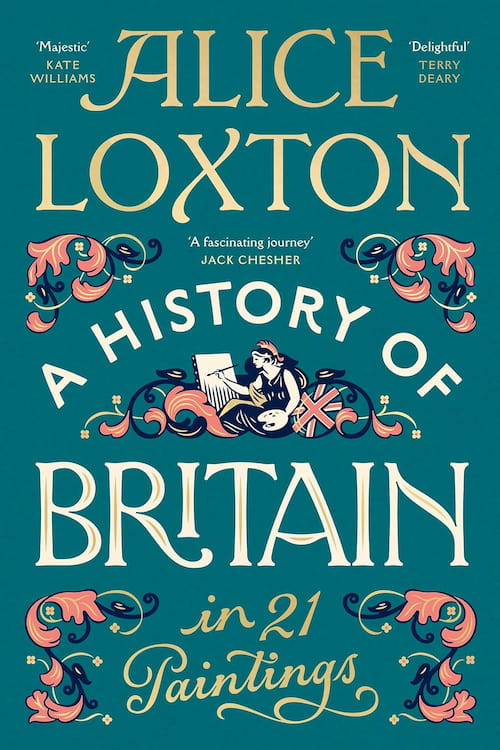
A History of Britain in 21 Paintings
Alice Loxton
Most of the details of our ancestors’ lives are forgotten, lost in the mists of time. Yet there are many sources – fireflies – that survive to illuminate our understanding of the past. In this case, those fireflies are paintings.
In this insightful book, Alice Loxton travels across Britain in search of 21 extraordinary paintings. From the wall art of St Cadoc’s Church near Cardiff and the exquisite detail of daily life portrayed by L.S. Lowry to landmark works including ‘The Rainbow Portrait’ of Elizabeth I and Millais’ ‘Ophelia’, Loxton creates a fresh, transformative history of Britain.
Considering each piece from the viewer’s perspective, she explores how it feels standing before them, what they are trying to tell and what their real-life inspiration reveals about the period when they were created.
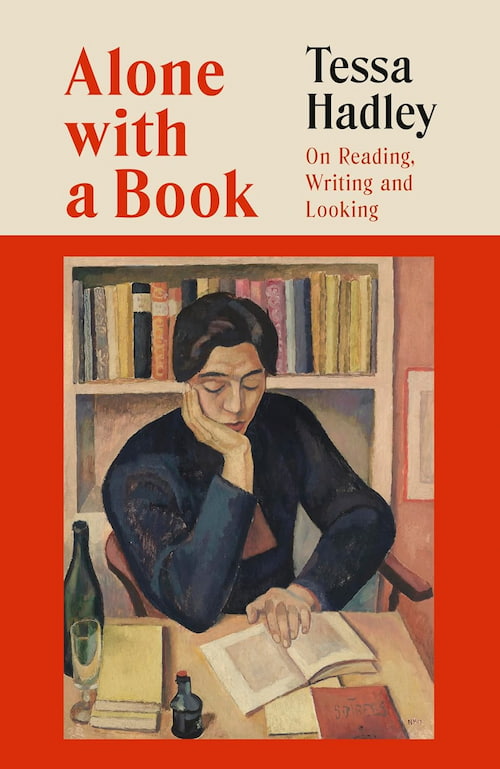
Alone With a Book: On Reading, Writing and Looking
Tessa Hadley
In this rich and engaging collection of essays, Tessa Hadley reflects on a lifetime of reading with the clarity and perceptiveness that have made her one of the most widely loved names in contemporary fiction.
She charts her development as a lover of literature from a book-mad childhood shaped by libraries and imaginary worlds, through the long, uncertain years of writing and teaching, to the mature artistic vision that defines her work today. Here, Tessa Hadley turns to writers as varied as George Eliot and George Saunders, Tolstoy and Elizabeth Bowen, and looks closely at a handful of paintings.
Throughout, her sharp eye, precise judgement, and instinct for style guides the reader towards the pleasures found in each text, and in a life made richer, deeper, and more fully imagined through art.
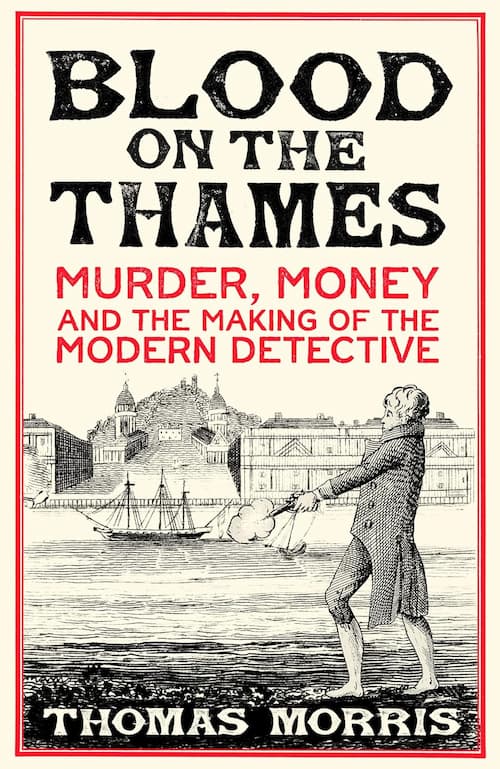
Blood On the Thames: Murder, Money and the Making of the Modern Detective
Thomas Morris
On an autumn night by the London docks, shipyard magnate Isaac Blight is found shot dead in his own armchair. Within hours, rumours spread across London and all fingers point to his business partner, Richard Patch. But Patch has an alibi, he has no obvious motive, and the crime scene is anything but clear.
Enter three men who will change the face of British justice: brilliant young surgeon Astley Cooper, relentless magistrate Aaron Graham, and courtroom superstar William Garrow. Together, they help forge the foundations of modern detective work. What unfolds next is the trial no one wants to miss. Cabinet ministers angle for seats, British royals flock to the gallery, and the future king of France watches from the wings as the court case takes twist after twist.
‘Blood on the Thames’ races through the backstreets and courtrooms of Georgian London, blending vivid history with the taut suspense of a classic crime novel.
The Village in Britain: And Why Place Matters
Simon Jenkins
We are a nation of villages, from the rural, picturesque hamlets of Castle Combe and Clovelly, to the tight-knit urban communities of Leeds’ terraces and Cricklewood’s backyards. Villages link us with our past and are the stuff of art, poetry, folklore and song – and for many they offer a place of community and sanctuary.
And yet Britain today is one of the most centralised political systems in Europe, with decisions on local matters made by national government and local communities feeling increasingly disempowered and disconnected.
In ‘The Village in Britain’, Simon Jenkins, author and former chair of the National Trust, delves into the past, present and future of this powerful national symbol, and argues that we need to find a way of embedding the qualities of the village into our modern lives.
The Last Best Place on the Internet: A Human History of Wikipedia
Richard Cooke
The first post to appear read simply: ‘hello world’. Two decades later, Wikipedia has defied the usual tech trajectory of commercialization and corruption and now stands as the largest repository of human knowledge in existence, containing over six million articles, accessed millions times every day by users throughout the world.
It has held true to its founding principles: it is still free to use, still worked on by unpaid, amateur and mostly anonymous volunteers, and still home to information as varied as it is glorious.
Here, Cooke takes us inside the world of Wikpedian’s, exploring the major schools of thought that underpin the project (Inclusionists and Deletionists), illuminating the concept of Wikidata and the site’s hidden legacy in AI, and investigating the inevitable controversies that have arisen – from specific pages on Jesus, Freddy Mercury, the Scots language, and Phillip Roth, to the problem of gender bias and sexism.
The Mushroom Tapes: Conversations on a Triple Murder Trial
Helen Garner, Chloe Hooper and Sarah Krasnostein
In July 2023, an unremarkable family lunch in a quiet, rural town spiralled into one of Australia’s darkest tragedies. Days after Erin Patterson hosted her estranged husband’s parents, aunt and uncle at her home, three of the guests were dead and another critically ill, all poisoned by Death Cap mushrooms.
Two years later, Patterson stood accused of this shocking crime and her court case gripped onlookers across the world. Amongst those drawn into the unfolding drama were three renowned true crime writers: Helen Garner, Chloe Hooper and Sarah Krasnostein.
Together, they followed Patterson’s preliminary hearings and trial, joined the media scrum at the Latrobe Valley Law Courts, stayed in a nearby motel and spent late nights immersed in fervent discussion about the case’s complex themes: love, hate, jealousy, revenge, marriage, money, mycology, and murder.
 English
 Polish
 Lithuanian
 Romanian
 Portuguese
 Bengali