


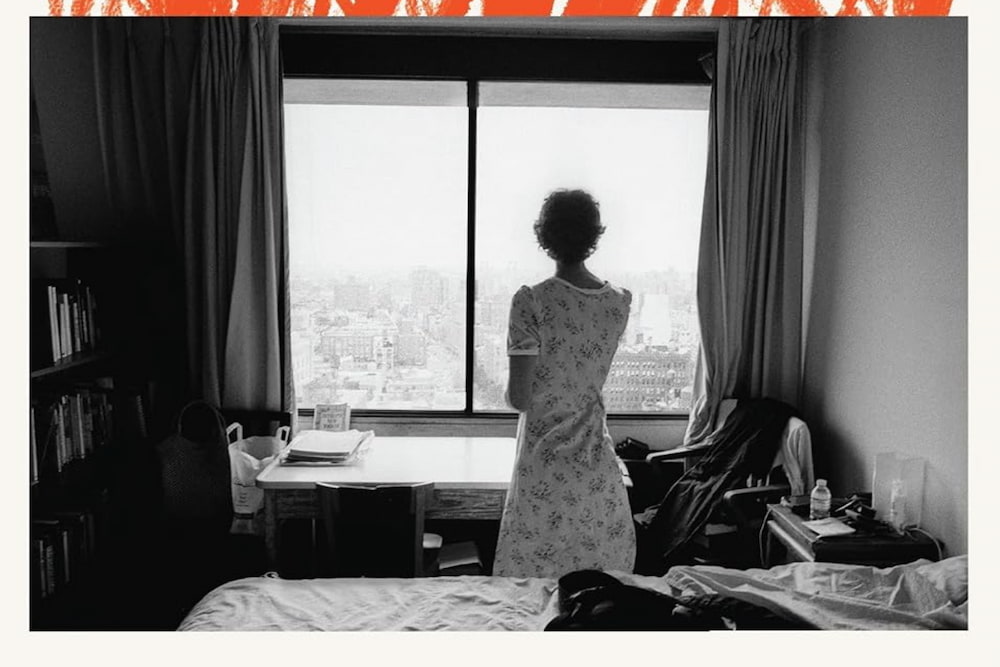
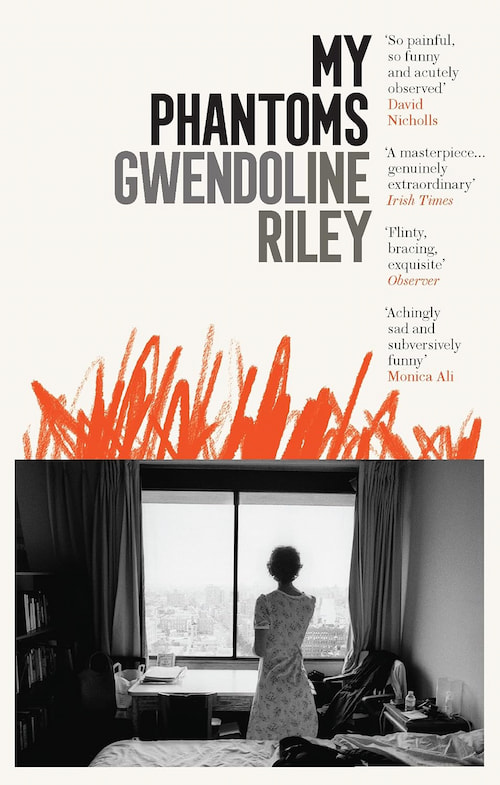
Volunteer book reviewer Lucy shares her thoughts on My Phantoms by novelist Gwendoline Riley, an insightful and painfully funny account of a family strained to breaking point.
Interested in reading My Phantoms? You can borrow a copy from our online catalogue to be collected at any Suffolk library.
About My Phantoms
Helen Grant is a mystery to her daughter. An extrovert with few friends who has sought intimacy in the wrong places; a twice-divorced mother-of-two now living alone surrounded by her memories, Helen (known to her acquaintances as ‘Hen’) has always haunted Bridget.
Now, her daughter Bridget is an academic in her forties. She sees Helen once a year, and considers the problem to be contained. As she looks back on their tumultuous relationship – the performances and small deceptions – she tries to reckon with the cruelties inflicted on both sides.
But when Helen makes it clear that she wants more, it seems an old struggle will have to be replayed.
Lucy’s Review
My Phantoms is Gwendoline Riley’s sixth novel and her most recent prior to The Palm House, which has just been longlisted for the Booker Prize 2026. This was my first experience of her work, and I read it voraciously within two sittings.
Set in contemporary London and Manchester, the novel follows the central character Bridget (known as Bridge) and her relationship with her two divorced parents. Bridge and her sister Michelle are very young when their parents separate, mirroring Riley’s own childhood experience.
Bridge’s father Lee only features briefly in the novel, but is so artfully drawn, it is a little painful to read. He appears as a narcissistic, self-important vigilante, but with no apparent cause; he invents his own reality and mythology, seemingly oblivious or uncaring to his audience’s scepticism.
The novel more closely follows her relationship with her mother, Helen (or Hen). Her mother’s own frustrations arise from her disappointment at life; her expectations or dreams are never realised, and she is unable to learn from her experiences. Throughout the novel, Bridge attempts to connect with her mother, or at least maintain a relationship, often finding herself performing to appease her.
At times, Bridge’s gaze teeters on the unkind and barbed, leaving the reader behind a little. But the character seems so self-aware of her ability to be caustic and flawed, that it merely reflects the accuracy of these relationships, in which the patience of one eventually gives out to unkindness or resentment.
Despite the disquieting subject matter, Riley still finds moments of comedy. Her humour lies in everyday observations, and she often turns a waspish eye over the mundane. Such as comparing a bird’s final moments on a window to the Turin Shroud or her mother heroically eating a mountain of shredded vegetables to appear adventurous about veganism.
Recommendation: It is a painful, sharp-eyed, beautiful novel which you can’t help but keep reading.
 English
  Polish
  Lithuanian
  Romanian
  Portuguese
  Bengali